The 384 vs 640 thermal question comes up in almost every thermal scope purchase. The numbers describe the sensor resolution, and they have a big effect on both image quality and price. In this guide, we explain what the numbers mean, how they change what you see, and when a 640 sensor is worth the extra money.

What do 384 and 640 mean?
A thermal sensor is made up of tiny heat-sensing pixels. A 384 sensor usually has 384 x 288 pixels, which is about 110,000 pixels in total. A 640 sensor usually has 640 x 512 pixels, or about 328,000 pixels. In other words, a 640 sensor has roughly three times as many pixels as a 384 sensor.
More pixels means more detail. As a result, edges look sharper, small objects stay clear and the image holds up better when you zoom in.
384 vs 640 thermal: image quality
At short range, a good 384 scope gives a clean, usable picture. You can easily see a hog or a coyote at 100 yards. However, the difference becomes clear as the distance grows. With a 640 sensor, an animal at 300 yards still shows a recognisable shape. With a 384 sensor, the same animal can look like a small warm blob.
Digital zoom also favours the 640. When you zoom in on a 384 image, the pixels quickly become visible. A 640 sensor keeps more detail at the same zoom level.
384 vs 640 thermal: field of view and magnification
Sensor size also affects your field of view. With the same lens, a 640 sensor gives a wider view than a 384 sensor. Alternatively, a 640 can use a larger lens and still keep a usable field of view. This is why many long-range 640 scopes pair the sensor with a 50mm lens.
For example, a 384 sensor with a 35mm lens and a 640 sensor with a 50mm lens can have a similar view. Yet the 640 shows much more detail. For scanning a field, that wider, clearer view saves time.
Beyond 384 vs 640 thermal: pixel pitch
Resolution is only part of the story. Pixel pitch, measured in microns (µm), is the size of each pixel. Most modern scopes use a 12 µm pitch, while some older or budget models use 17 µm. A smaller pitch gives more base magnification from the same lens. So a 12 µm 384 sensor can sometimes outperform an older 17 µm 384 sensor at range.
When you compare 384 vs 640 thermal scopes, always check the pitch and the lens size as well. Together, these three numbers tell you far more than resolution alone.
384 vs 640 thermal: price
A 640 sensor costs more to make, so 640 scopes are more expensive. The gap has narrowed in recent years. Even so, a 640 model often costs noticeably more than a similar 384 model from the same brand.
For many hunters, a high-quality 384 is better value than a budget 640. Therefore, compare the whole package: sensor sensitivity (NETD), lens quality, display, battery life and warranty.
384 vs 640 thermal: which should you choose?
- Choose 384 if most of your shots are under 150 yards, you hunt brush or woods, or you want the best value.
- Choose 640 if you hunt open fields, want to identify animals past 200 yards, or use digital zoom often.
- Choose 640 with a rangefinder if you take long shots and want ranging and ballistics built into the scope.
In short, the 384 vs 640 thermal decision comes down to distance. If you shoot close, 384 is enough. If you shoot far, 640 is worth it.
384 vs 640 thermal: frequently asked questions
Is a 384 thermal scope good enough for hogs?
Yes. A quality 384 scope is more than enough for most hog hunting, because many shots are under 150 yards. It also costs less and often runs longer on a battery.
Does a 640 sensor see farther?
A 640 sensor does not detect heat farther on its own. However, it shows much more detail at long range. That makes it easier to identify what you are looking at before you shoot.
What matters more than resolution?
The lens, pixel pitch and sensitivity (NETD) all matter as much as resolution. A good 384 sensor with a quality lens can beat a cheap 640 sensor.
Compare 384 and 640 scopes
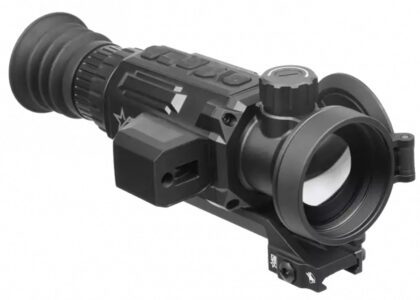
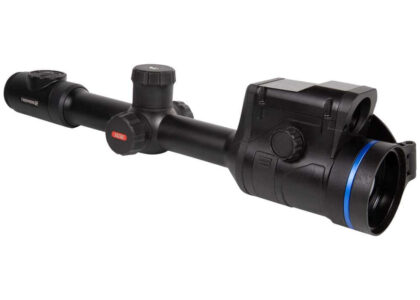
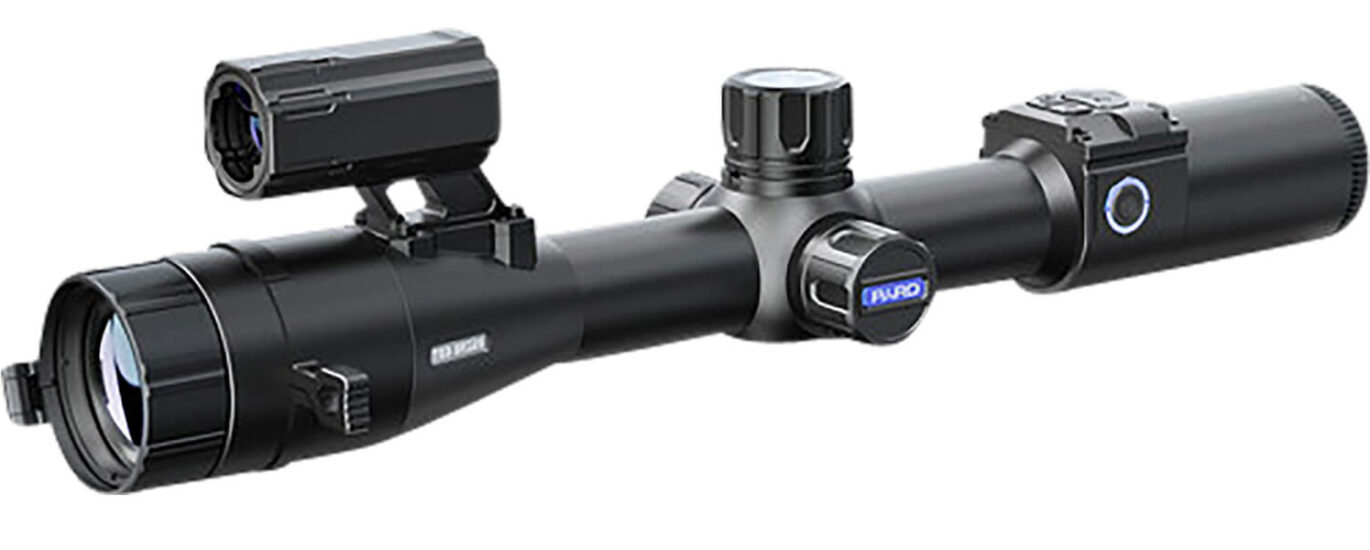
You can compare both sensor sizes in our thermal scopes range. Good 384 examples include the PARD SA32. For 640 performance, look at the AGM Rattler V2 35-640 or the Pulsar Thermion 2 LRF XP50 Pro. For more detail on specs, read our guide on how to choose a thermal scope, or learn more about how thermal imaging cameras work.