A good thermal scope for coyote hunting can turn a slow night into a successful one. Coyotes are smart, wary and often hang up just out of range. They also tend to come in at night, when the wind is calm and the woods are quiet. As a result, the right thermal optic lets you see them early and make a clean shot. This guide explains what to look for and how to set up your gear.

Why a thermal scope for coyote hunting works so well
Coyotes give off a clear heat signature, even through light cover. A thermal scope picks up that heat at long distances, often long before you could see the animal by eye. In addition, thermal works on the darkest nights, with no moon at all. That means you can hunt more nights each month.
Another advantage is that coyotes cannot see the thermal scope working. Unlike a light or an IR illuminator, thermal gives off nothing that might spook a cautious animal.
Choosing a thermal scope for coyote hunting: sensor size
Coyotes are smaller than hogs, and shots are often longer, especially in open country. Because of this, sensor resolution matters more. A 640 sensor shows a clearer outline at 200 to 300 yards. That helps you tell a coyote from a fox, a deer or a farm dog before you shoot.
That said, a quality 384 scope still works well if most of your shots are under 150 yards. For a full comparison, read our guide to 384 vs 640 thermal scopes.
Lens size and magnification
A larger lens gives more base magnification and longer range. For open fields, a 50mm lens is a popular choice. However, a big lens narrows your field of view. If coyotes often appear close and fast, a 35mm lens gives you a wider view and quicker target pick-up.
Many coyote hunters scan with a separate thermal monocular. This lets them keep a wide view while the rifle scope stays at a higher magnification for the shot.
Is a laser rangefinder worth it?
For most coyote hunters, yes. Judging distance at night is very hard, and a missed range estimate often means a missed shot. A thermal scope with a built-in laser rangefinder (LRF) measures the distance for you. Some models also include a ballistic calculator that adjusts the aiming point automatically. This is especially useful for shots past 200 yards.
Other features to look for
- Refresh rate: 50Hz or higher keeps the image smooth when a coyote is moving.
- Sensitivity (NETD): a lower number shows more detail in humid or foggy conditions.
- Battery life: calling sessions can last all night, so look for long run time or swappable batteries.
- Recording: built-in video lets you review shots and share your hunts.
- Recoil rating: make sure the scope suits your calibre.
Setting up your coyote rig
First, zero the scope carefully at your usual hunting distance. Our guide on how to zero a thermal scope walks you through each step. Next, set the display brightness low. A bright screen can ruin your night vision and may even light up your face. Finally, use a solid rest, such as shooting sticks or a bipod, because coyotes rarely give you long to aim.
Thermal scope for coyote hunting: frequently asked questions
What magnification do I need for coyotes?
For most coyote hunting, base magnification between 2x and 3.5x works well. You can then use digital zoom for a closer look before the shot.
Is a thermal scope for coyote hunting better than night vision?
In most cases, yes. Thermal spots coyotes in cover and on dark nights much more easily. Night vision can still work in open fields with a strong IR light.
What calibre suits a thermal coyote rig?
Popular choices include .223 Remington, .22-250 and 6.5 Creedmoor. Whatever you choose, check that your scope’s recoil rating matches your calibre.
Our picks: the best thermal scope for coyote hunting
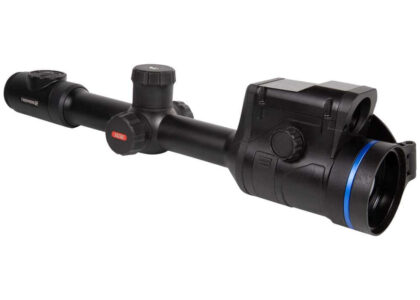
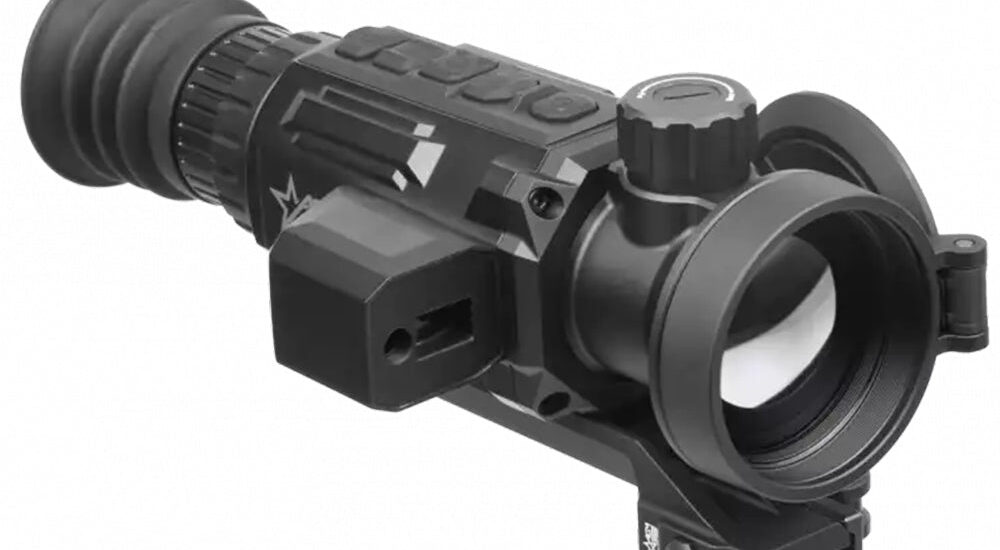
For long open-country shots, a 640 scope with a rangefinder is hard to beat. Good options include the AGM Secutor LRF 50-640 and the Pulsar Thermion 2 LRF XP50 Pro. For tighter cover or a lower budget, a 384 scope with a 35mm lens is a smart start.
In short, the best thermal scope for coyote hunting is the one that matches your terrain and your typical shot distance. Browse our full range of thermal rifle scopes, or read more about the coyote and its habits. If you need advice, contact our team.